Dallas video shoot checklist: a better plan, a smoother day.
A Dallas video shoot checklist should do more than remind you to charge batteries. It should tell the client what to prepare, give the videographer a workable schedule, and leave the editor with footage that fits the final placements. Use this guide for a business interview, hospitality content day or small brand production in Dallas.
1. Write the deliverables before the shot list
“We need a video” is not a production brief. Write down the audience, the action you want them to take, where the video will appear, and the date it needs to be ready. A hotel homepage film, an employee interview and a paid social ad need different coverage even when they use the same room.
Make a small delivery matrix. For each asset, list its length, orientation, spoken message, captions, music usage and approval owner. Ask the agency or marketing team for current placement specifications instead of assuming one export fits every channel. If both horizontal and vertical edits matter, frame for both at capture.
- Business owner: bring the offer, audience, approved talking points and one person who can sign off.
- Videographer: turn the brief into setups, coverage and realistic time blocks.
- Editor: confirm project settings, audio needs and delivery requirements before the shoot.
For a recurring library of social, website and advertising assets, read our Dallas content day guide. For this checklist, the goal is narrower: make the next production day work.
2. Separate location permission from filming permits
The venue contact, property boundary and actual crew footprint matter more than a neighborhood name. Get written permission for the spaces you will use, plus the approved arrival time, loading entrance, parking, power access and any insurance requirements. A restaurant manager approving the dining room does not automatically approve equipment on an adjacent public sidewalk.
The City of Dallas lists filming on public property, traffic impacts, blocked sidewalks and city-property B-roll among situations requiring its permit process. Start with the Office of Special Events commercial filming page and describe your exact setup. Do not assume a handheld camera or a small crew makes the answer automatic.
The Dallas Film Commission's permit guidance lists at least three business days for standard review and five for complex productions. Treat those as minimum review windows, not guaranteed approval dates. Private-property permission and any public-space impacts still need separate attention. A shoot in Plano, Irving or Fort Worth needs the relevant jurisdiction's rules, not a Dallas assumption.
For backdrop ideas, use our Dallas filming locations guide, then verify access with the responsible location and permitting office.
3. Budget for the door-to-door move
Travel time is not just a map estimate. A move from a downtown office to a second venue includes packing, parking, security, unloading and rebuilding the setup. Keep essential interviews and product coverage at one base whenever possible. Add a second location because it earns its time, not because it looks close on a map.
Put a named onsite contact, exact load-in address, parking instructions and freight-elevator arrangement on the call sheet. Confirm which door opens before business hours. Ask about deliveries, cleaning, public events and background music. These are small questions that prevent a paid crew from waiting in a lobby.
4. Build a weather alternative before you need it
North Texas conditions deserve a production decision, not a hopeful note. The National Weather Service's DFW climate overview describes hot summers and thunderstorm-driven rainfall, with spring and fall generally the wetter seasons. Check the forecast and alerts for the actual shoot date; a seasonal average is not a forecast.
Choose the outdoor look during the scout, then schedule it around the light on that date. Reserve an indoor setup that can deliver a useful scene if exteriors are postponed. Agree who makes the weather call, when the decision happens and how rescheduling affects the scope. Put those decisions in writing before the crew arrives.
For a hospitality shoot, that alternative might be a quiet interview, a prepared room or a controlled tabletop sequence. It should support the brief, not be unrelated filler filmed while everyone waits.
5. Scout the room with your ears
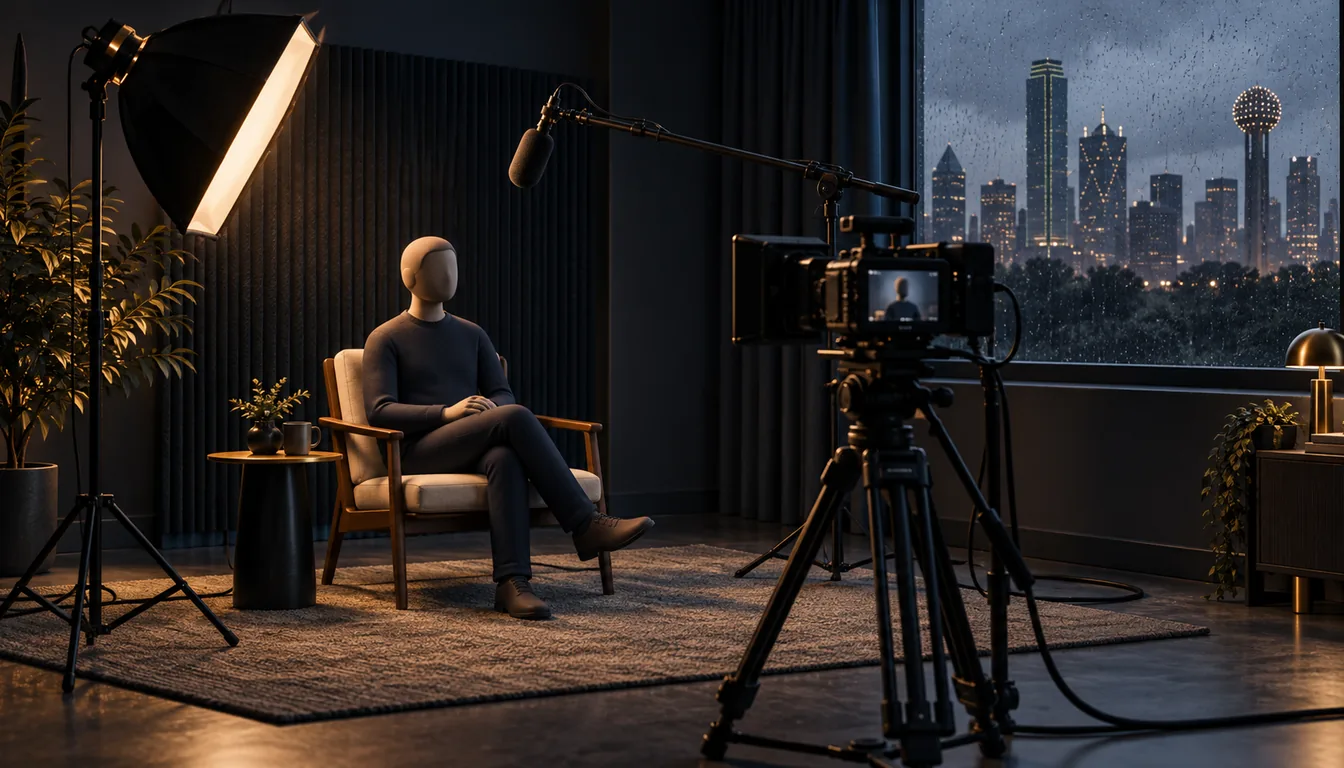
A beautiful room can be a poor interview location. Listen for air conditioning, refrigerators, kitchen equipment, street noise, lifts and music. Walk through at the time you expect to record. A quiet empty restaurant during the scout may sound very different during service.
Record a short spoken test and listen through headphones. Check microphone placement, clothing rustle and room reflections. Where practical, record a close microphone plus a separate backup source. Monitor throughout the take; a second track only helps if it contains usable sound. Capture room tone for the editor.
Ask the venue what can be adjusted without disrupting operations. If noise cannot be controlled, change rooms or timing before bringing in the interview subject. Do not promise that software will rescue any recording.
6. Capture sequences, not isolated pretty shots
Each important action needs a beginning, a middle and an end. Give the editor a wide view that explains the place, a medium view of the action and a detail that makes it specific. Hold each shot long enough for an edit, and leave a little time before and after the action.
For a hypothetical Dallas restaurant brief, the coverage might look like this. This is a planning example, not a promise of a particular PPV package.
| Scene | Coverage | Delivery check |
|---|---|---|
| Guest arrival | Exterior context, entrance, welcome detail | Access cleared; frame a vertical version |
| Food preparation | Workstation wide, hands working, final detail | Dish matches the approved menu |
| Short interview | Clean answer, alternate framing, matching action | Quiet audio and approved factual claims |
| Finished experience | Room atmosphere, service, product close-up | Consent and background cleared for intended use |
Keep faces, products and captions away from likely crop edges. Record a dedicated vertical take when a horizontal composition would lose the subject. Check focus, exposure, color consistency and LED flicker on location, while a retake is still possible.
7. Make aerial footage a separate planning decision
A drone is not a guaranteed extra shot. Ask the pilot to check the exact location, airspace, current restrictions, takeoff permission and operating conditions. Under Part 107, operations in applicable controlled airspace require FAA authorization; a pilot certificate by itself does not supply it. See the FAA's airspace authorization guidance.
Let the qualified pilot determine whether the planned operation can proceed. Keep a ground-based establishing shot on the list so the story does not depend on an unconfirmed aerial. Our Dallas drone videographer guide provides more context, with the FAA as the current source for airspace requirements.
An example eight-hour production day
This is a starting schedule for a small production at one main location, including a one-hour meal break. Adjust it for venue access, crew agreements, daylight, talent availability and the actual scope. It does not include a company move.
| Time | Block | Checkpoint |
|---|---|---|
| 8:00–9:00 | Load-in, lighting and sound test | Approve the first frame and audio |
| 9:00–10:30 | Essential interview or main scene | Capture the must-have story first |
| 10:30–12:00 | Supporting sequences | Wide, medium, detail; both orientations |
| 12:00–1:00 | Meal break | Keep the break protected |
| 1:00–2:30 | Product, lifestyle or approved exterior | Use the indoor alternative if needed |
| 2:30–3:15 | Pickups and missing coverage | Compare against the delivery matrix |
| 3:15–4:00 | Data verification, pack and reset | Confirm backups and restore the space |
If the brief depends on sunset, rebuild the schedule around the actual sunset time rather than adding it onto an already full day. A call sheet should show the plan you intend to run.
8. Finish with a handoff the editor can use
Before clearing cards, verify at least two copies on separate storage devices. Use checksum verification where your transfer tools support it, open sample clips and listen to sample audio. A folder with filenames is not proof that all media copied correctly. Keep the original cards until the agreed backup and handoff process is complete.
Deliver camera originals, audio, project notes and selects in labeled folders. Note the chosen takes, sync method, frame rates, color settings, pronunciation guidance and any usage limits. Name the client reviewer and first-cut deadline. Keep the source media, edit project and approved exports in the agreed cloud project folder so a different editor or computer can continue the work.
Copy this Dallas shoot-day checklist
Paste these items into your brief or call sheet. Assign an owner and a confirmed answer to each.
- Audience, message, placements, orientations and delivery date agreed.
- Priority shot list approved; optional shots clearly separated.
- Property contact, written access and applicable permits confirmed.
- Loading entrance, parking, lift access and power checked.
- Talent, products, wardrobe, consent and usage requirements cleared.
- Light and sound scouted at a relevant time of day.
- Forecast, indoor alternative and weather decision owner agreed.
- Drone plan independently cleared by the pilot, if included.
- Camera, audio, media, batteries and backup equipment tested.
- Meal break, setup time, pickups and pack-down on the schedule.
- Separate verified media copies and cloud handoff plan arranged.
- One approver, first-cut date and feedback process named.
Dallas video shoot questions
What should a client prepare before a Dallas video shoot?
Prepare the audience, message, delivery date, placement specifications, approved talking points and priority shot list. Confirm access, talent, products, permissions and one person who can approve decisions on the day.
Do small crews need a Dallas filming permit?
A small crew is not an automatic exemption. The City of Dallas identifies filming on public property, traffic impacts, blocked sidewalks and city-property B-roll among permit situations. Describe your exact location and footprint to the Office of Special Events before filming.
How many locations should we plan for one day?
Start with one main location for a small production. Add another only after allowing for packing, travel, parking, security, unloading and a new setup. The right number depends on the priority shots and access, not just the distance between addresses.
What happens if outdoor filming is postponed?
Use the indoor alternative agreed in the brief, or follow the agreed rescheduling plan. Name the weather decision owner and decision time in advance. Check the forecast for the actual shoot date and make sure the alternative still supports the story.
Can one shoot produce horizontal and vertical videos?
Yes, when both are planned before filming. Keep important subjects clear of crop edges and capture dedicated vertical takes when the horizontal framing will not translate. Confirm each delivery format with the marketing team or editor.
Need a crew for your Dallas production?
Picture Perfect Video produces brand films, interviews and content days in Dallas. Bring your brief, venue and delivery date. We will help turn them into a practical production plan.
Book a 30-minute consultation →More Dallas guides
- Dallas Contractor Videos: Phone Footage or Professional Crew?
- Dallas Contractor Testimonial Videos: A Practical Shoot Guide
- Dallas Roofing Video Marketing: A Practical Content Plan
- Dallas Contractor Video Production: Photos, Films and Trust
- Hiring a Dallas videographer and photographer
- Planning a Dallas content day
- Scouting Dallas filming locations
- Dallas video production cost factors
Official permit, weather and airspace references checked September 18, 2026. Confirm requirements for your location and shoot date using the linked primary sources. Planning examples are illustrative; deliverables and schedules are agreed per project.