Dallas Roofing Video Marketing: A Practical Content Plan
The best roofing video answers the question a homeowner is already asking: can I trust this company with my home? A dramatic aerial shot can get attention, but a clear explanation, a recognizable crew and an honest record of the finished project give that attention somewhere useful to go. Here is how to plan roofing video marketing in Dallas around evidence, not just a highlight reel.
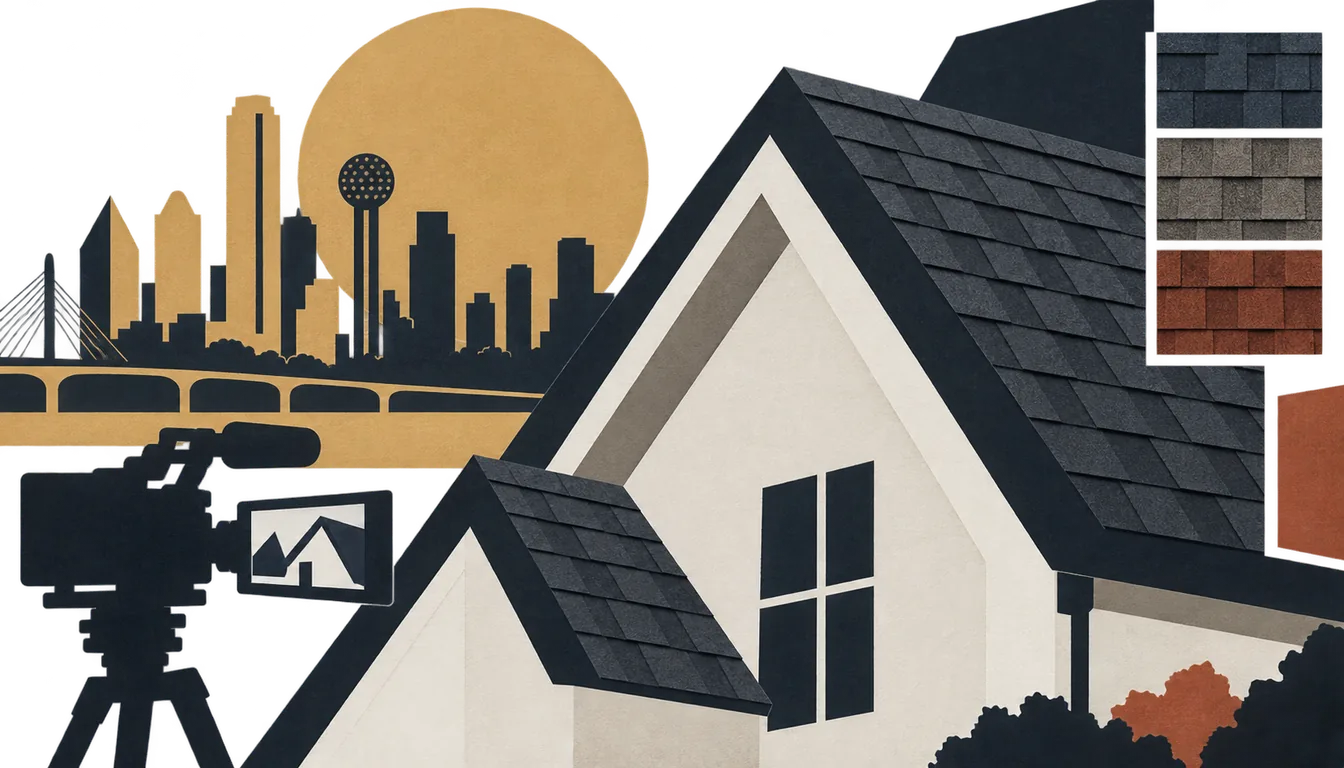
Start with one homeowner question
A roof replacement, a repair inquiry and a commercial maintenance conversation need different stories. Before you book a shoot, choose one service, one audience and one next step. “Show homeowners what a replacement day looks like” is a useful brief. “Make us look good” leaves too many decisions until the camera is already rolling.
For a Dallas roofing company, the opening might be a project manager explaining how the team prepares a property before work starts. Follow that with approved footage of the preparation, the work as observed from a safe position and the completed exterior. End with the actual way to request an estimate. Keep insurance, warranty and technical statements in the contractor's approved language; a marketing edit should not create a promise the business cannot support.
Picture Perfect Video handles the production side: planning, interviews, photography, filming and editing. The roofer supplies the technical expertise and verifies what the finished piece says. That division makes the content more credible and the approval process easier.
Five roofing videos worth planning first
| Video | What to capture | Where it helps |
|---|---|---|
| Meet the local crew | A short owner introduction, team portraits and the person who answers project questions. | Homepage and estimate follow-up. |
| What happens on project day | Arrival, property preparation, approved work coverage and the final walkthrough. | Replacement service page. |
| One project, before and after | Matching views, accurate dates and the contractor's explanation of the agreed scope. | Project story and social post. |
| A homeowner's real question | One clear answer about scheduling, communication or what to prepare before the crew arrives. | FAQ page and short vertical video. |
| Customer experience | A willing customer describing what happened in their own words, with permission. | Project page and sales follow-up. |
These do not all require separate productions. A well-planned project visit can supply several pieces, but the number depends on access, the actual work schedule and the time available for interviews. Agree on priority deliverables before filming instead of promising a fixed number of reels from any job.
A roofing shot list that tells a complete story
Build the sequence in three layers: context, process and proof. Context shows the property and introduces the people. Process explains what the audience is seeing. Proof shows the finished result without exaggerating what a camera can establish.
- Context: an approved exterior wide shot, the crew introduction and the project manager's explanation of the assignment.
- Preparation: material samples, the planned work area and customer communication, filmed without exposing private paperwork.
- Process: a small set of relevant details captured from positions approved by the site lead. Schedule these around real work.
- Completion: matching exterior views, visible finish details and the walkthrough the contractor has approved for filming.
- Next step: a concise explanation of how to contact the company and what information to have ready.
Ask the editor for horizontal framing for the website and intentional vertical coverage for social posts. A wide roofline and a person standing beside a house do not always survive an automatic vertical crop. Capture separate takes when needed, and leave clean space for readable captions.
Make before-and-after comparisons honest
Choose the camera positions before the work begins. Save reference frames and note the lens, height and direction. Return to those positions after the project so viewers can understand the change. If weather or access prevents an exact match, say so in the caption rather than making unrelated angles look like a controlled comparison.
Keep the property, project scope and dates consistent. Do not use stock damage footage as the “before” for a real customer's roof. Do not use an AI image as evidence of completed work. A polished comparison can show appearance and the documented scope, but it does not replace the roofer's inspection or establish hidden conditions.
Get permission for the property and anyone featured. Check frames for addresses, license plates, children's faces and documents before publishing. A neighborhood name may provide useful Dallas context without showing a homeowner's precise address.
Plan Dallas access, weather and drone coverage early
Choose a real project location and confirm the property contact, parking, crew arrival and usable filming positions. Dallas, Richardson, Plano and neighboring cities should not be treated as one interchangeable location on a call sheet. Confirm the actual municipality and site requirements, and allow time for travel and unloading between locations.
Outdoor roof coverage depends on the conditions on the day. Name the person who decides whether to proceed and agree on a backup: an indoor owner interview, a tabletop materials explanation or a rescheduled exterior session. Do not pressure a working crew to repeat an unsafe activity for a camera. The site lead controls access; the production schedule follows the work.
Aerial footage is optional. Commercial drone work typically falls under the FAA's Part 107 framework, and controlled airspace can require authorization. Around the Dallas area, give the pilot the exact address and proposed timing before promising a flight. The pilot must evaluate the location, airspace and operating conditions. See the FAA's Part 107 overview and airspace authorization guidance.
A strong ground-level sequence and a clear interview can carry the story when aerial filming is unavailable. Our Dallas shoot checklist covers the wider production plan.
Watch how a building becomes a visual story
The Drey Hotel brand film below is an existing PPV hospitality project in Dallas. It is included as a production reference for establishing a property and moving between overall views and details. It is not a roofing case study or evidence of roofing work. For your project, those filmmaking choices would be built around your own roof, crew and approved story.
Watch for: how the film introduces a place, changes scale and gives individual details room to register. A roofing edit should apply that visual clarity while letting the contractor's explanation lead. See more actual PPV portfolio work.
Turn a project visit into useful website content
Put the main video on a relevant service or project page, alongside a short written account: what the customer needed, what the contractor was hired to do, where the project took place at an approved level of detail and what the viewer can do next. Add selected photographs with descriptive captions. Written context also helps people who cannot watch or listen.
A practical release plan might start with the complete project story, follow with a crew introduction, then publish two separate homeowner questions. Give each post its own useful point. Keep real project photos, approved statements, release permissions and final edits in a shared cloud folder so future updates do not depend on one person's laptop.
For local discovery, keep your business information accurate and publish specific, helpful project content. Google says local results depend mainly on relevance, distance and prominence. More videos do not guarantee a higher position. Use Google's local ranking guidance as the baseline, and avoid near-identical pages that simply swap Dallas for another city.
Measure inquiries, not only views
Choose the business outcome before release: qualified estimate requests, booked conversations or engagement with a service page. Track which content sends visitors to that next step, and ask new inquiries how they found the company. A short FAQ that helps an undecided homeowner can be more useful than a widely viewed clip seen by people outside the service area.
Review the pattern after enough real traffic has accumulated. If viewers reach the page but do not inquire, check whether the next step is clear and whether the content answers the questions sales staff hear most often. Do not claim that one video caused every lead that arrived after publication.
Roofing video marketing questions
What should a Dallas roofing company film first?
Start with a crew introduction, a clear explanation of the customer process and one approved project story. These pieces give visitors a practical understanding of the company before expanding into a larger content library.
Do roofing marketing videos need drone footage?
No. Ground-level exterior views, detail shots and a useful interview can tell a complete story. Drone coverage should be planned only when the pilot confirms that the location and conditions support it.
Can one roofing shoot produce photos and social videos?
Yes, if both are included in the brief. Agree on the priority photos, website video and vertical clips before filming, with deliverables based on access and the project schedule.
What affects the price of a roofing video production?
The number of locations, filming time, crew, interviews, aerial requirements and final edits all affect the scope. Share the project schedule and desired deliverables so the quote reflects the actual production.
Plan your Dallas content shoot.
Bring your project, customer questions and publishing goals. We will help scope the photography, video and interviews around what your business needs.
Book a 30-minute consultation →More Dallas guides
Published September 18, 2026. Examples and schedules are planning recommendations, not promises of project results. Referenced portfolio films are existing hospitality work; trade expertise and technical statements come from the featured contractor.