Dallas Contractor Testimonial Videos: A Practical Shoot Guide
A useful contractor testimonial helps the next customer understand what it was like to work with the company. It names a concern, describes the experience and gives enough detail to feel grounded in a real project. For Dallas roofing, plumbing, landscaping and design businesses, the production should make that story easier to hear without putting words in the customer's mouth.
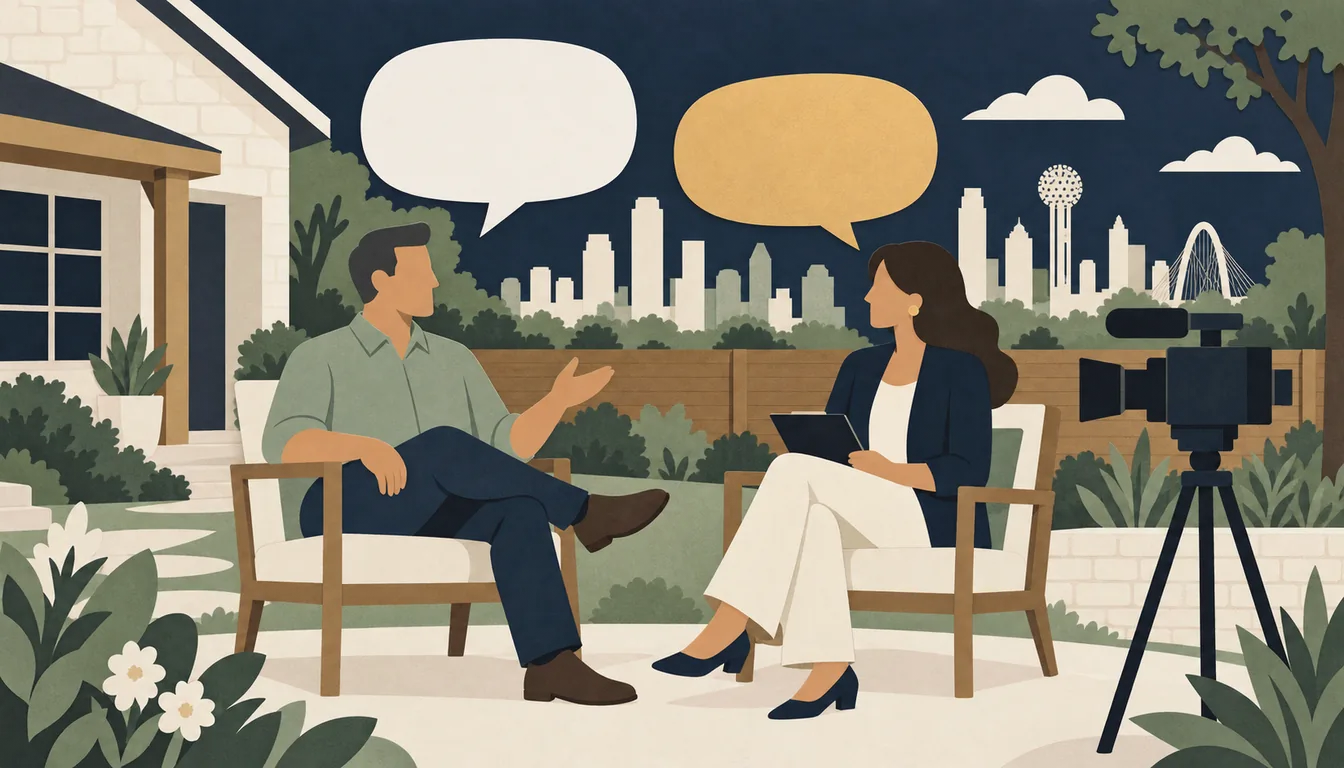
Choose a story the next customer will recognize
Start with a real customer who is willing to speak and has a specific experience to describe. The story does not need to be dramatic. Clear communication during a scheduled repair, a well-explained project process or a design choice that made a space more useful can all provide meaningful context.
Choose a subject that matches a service the business actually provides. A roofing company might focus on how the homeowner was kept informed. A plumbing business might explore what the customer understood before the visit. A landscape contractor or architect might ask how the finished space relates to the original brief.
These are interview directions, not sample customer claims. The actual person must supply the experience. If the available story does not support the marketing message, change the message or choose another format. An owner explanation is more appropriate than inventing a customer endorsement.
Prepare the person, not a script for praise
Explain where the video may appear, who will film it and roughly how the conversation will work. Discuss the planned use and obtain appropriate permission before recording. Let the customer know they can decline a question and can identify information they do not want published.
Send the topics in advance so the customer can remember the project, but avoid prescribing the answer. Ask for the person's own words. A conversation that sounds like a person remembering an experience is more useful than a polished slogan delivered reluctantly.
Confirm how the person wants to be identified. A first name and general Dallas-area location may be sufficient if they prefer not to display a surname or address. The production team should also know which rooms, documents, family members and exterior details must stay out of frame.
Schedule the interview at a calm point in the project. Do not make the customer speak while active work, equipment or time pressure makes it difficult to concentrate. An accessible, quiet location can be more valuable than the most impressive background.
Ask questions that invite an actual experience
Begin with easy factual questions and move into the decisions that mattered. Ask one question at a time, then give the person room to finish. A useful follow-up is often a request for an example, not another leading question.
| Part of the story | Question | What it helps clarify |
|---|---|---|
| Starting point | What were you hoping to accomplish? | The customer's own goal. |
| Decision | What did you want to understand before choosing a company? | The information that mattered to the buyer. |
| Process | How did you receive updates during the project? | A concrete experience of communication. |
| Specific moment | Can you describe something the team explained or helped you decide? | A detail beyond general praise. |
| Outcome | What is different for you now that the work is complete? | The customer's observed experience. |
| Advice | What would you suggest another customer ask before starting a similar project? | A useful takeaway for the viewer. |
If an answer is vague, ask what the person means. Do not turn “the communication was good” into a specific promise about response times unless the customer actually described that experience and the business can support the claim. The editor should not have to invent the missing detail.
Make the filming comfortable and easy to follow
Place the interviewer near the camera so the customer has a person to talk to. Explain whether the person should look at the interviewer or directly at the lens. Keeping that choice consistent is easier than changing it repeatedly during a short conversation.
Listen to the room before recording. Air conditioning, passing traffic, machinery and a nearby conversation can interfere with the answers. Test the microphone with the actual speaker and listen back. If the work area is noisy, record the interview somewhere quieter and capture the project images separately.
Choose a background connected to the story without exposing unnecessary private information. Check the edges of the frame for mail, family photographs, documents and addresses. Give the person time to settle in before moving to the questions that matter most.
For Dallas-area customers, plan parking, building access and the best interview time with the property contact. Keep the production footprint appropriate to an occupied home or business. A larger setup is useful only when it helps the interview and can be accommodated comfortably.
Capture project images that support the words
The supporting footage should show the project being discussed. Record an overall view, relevant details and any agreed demonstration of how the finished space is used. Avoid covering a statement about one job with unrelated footage that could make viewers believe it shows the same result.
For roofing, approved exterior views can establish the property and documented scope. For plumbing, show the relevant finished fixture or installation without turning the testimonial into a technical diagnosis. For landscaping and architecture, connect the wide view with the particular feature the customer mentions.
If the story involves a before-and-after change, identify the source and dates of the earlier images. Keep the comparison understandable. Where no earlier footage exists, use the customer's explanation or a clearly labeled graphic rather than manufacturing a photographic “before.”
Our contractor photo and video guide provides more trade-specific ideas, and the roofing marketing guide covers project coverage in more detail.
Edit for clarity while preserving the meaning
Remove pauses, repeated phrases and distractions without changing what the person meant. Keep important qualifications attached to the statement they explain. If a customer says a particular part of the experience went well, do not cut the answer to imply that every aspect of every project will produce the same result.
Add accurate captions and review names, locations and service terminology. Choose a headline that the interview actually supports. A modest, specific statement is stronger than an exaggerated headline that turns the customer's experience into a guarantee.
The FTC's endorsement guidance emphasizes truthful experiences and opinions and explains when material connections need disclosure. If payment, a discount, an employment relationship or another connection is involved, address disclosure before publication rather than leaving the editor to guess. The FTC's reviews and testimonials Q&A provides further guidance.
Keep a record of the original interview, permissions and approved final version. A future edit should be traceable to what the customer actually said, not just to a shortened clip that has lost its context.
Give each version a clear place to live
Use a complete customer story on a relevant project or service page, with a written summary for people who cannot watch. A shorter vertical cut can introduce one point and direct viewers to the fuller context. Avoid trying to fit every answer into a single rapid montage.
Agree on the formats before filming. A customer framed at the edge of a wide shot may be difficult to crop for a phone screen. Dedicated vertical framing or a carefully planned central composition can prevent that problem. Our phone footage versus professional crew guide explains how to choose the capture approach.
Keep the next step straightforward: review the related work, learn about the service or request a conversation. Track whether the page helps prospective customers ask more informed questions. Do not assume views alone show that the testimonial changed a purchasing decision.
Use this brief before scheduling the interview
- Identify the actual customer, project and service being discussed.
- Confirm the intended placements and publication permission.
- Choose the customer questions and leave answers unscripted.
- Agree on identification, privacy limits and filming access.
- Find a quiet interview location and test sound.
- List the real project images that support the conversation.
- Review claims, captions and any required disclosures.
- Assign one approver and store originals and finals in the cloud.
Picture Perfect Video can plan the interview, photography and supporting footage with your team. Bring the customer's availability, project details and the places the finished video will appear. We will help turn that information into a practical production scope.
Common questions
Should a contractor write a script for a customer testimonial?
Prepare topics and factual project details, but let the customer describe the experience in their own words. Do not prescribe praise or add claims that the person did not make.
How long should a testimonial video be?
Choose the length around the story and placement. Plan a fuller version for the project or service page and shorter excerpts only when they preserve the meaning and context.
Can a customer testimonial be filmed on a phone?
Yes, if the picture, sound, location and permissions are suitable. Test the setup first and share original files with the editor. A crew can help when the interview or supporting coverage needs more coordination.
What if a customer does not want their home address shown?
Agree on an identification and filming plan before recording. Use only the approved name or general location, and check exterior views and background details for information the customer wants kept private.
Bring your Dallas project.
Tell us about the work, the people and where the finished content will appear. We will help scope the production around your priorities.
Book a 30-minute consultation →More Dallas guides
LA411 reference checked September 18, 2026. The feature describes creator production; the contractor workflows here are PPV's planning recommendations, not reported client results.