Dallas drone videographer: what is actually legal here.
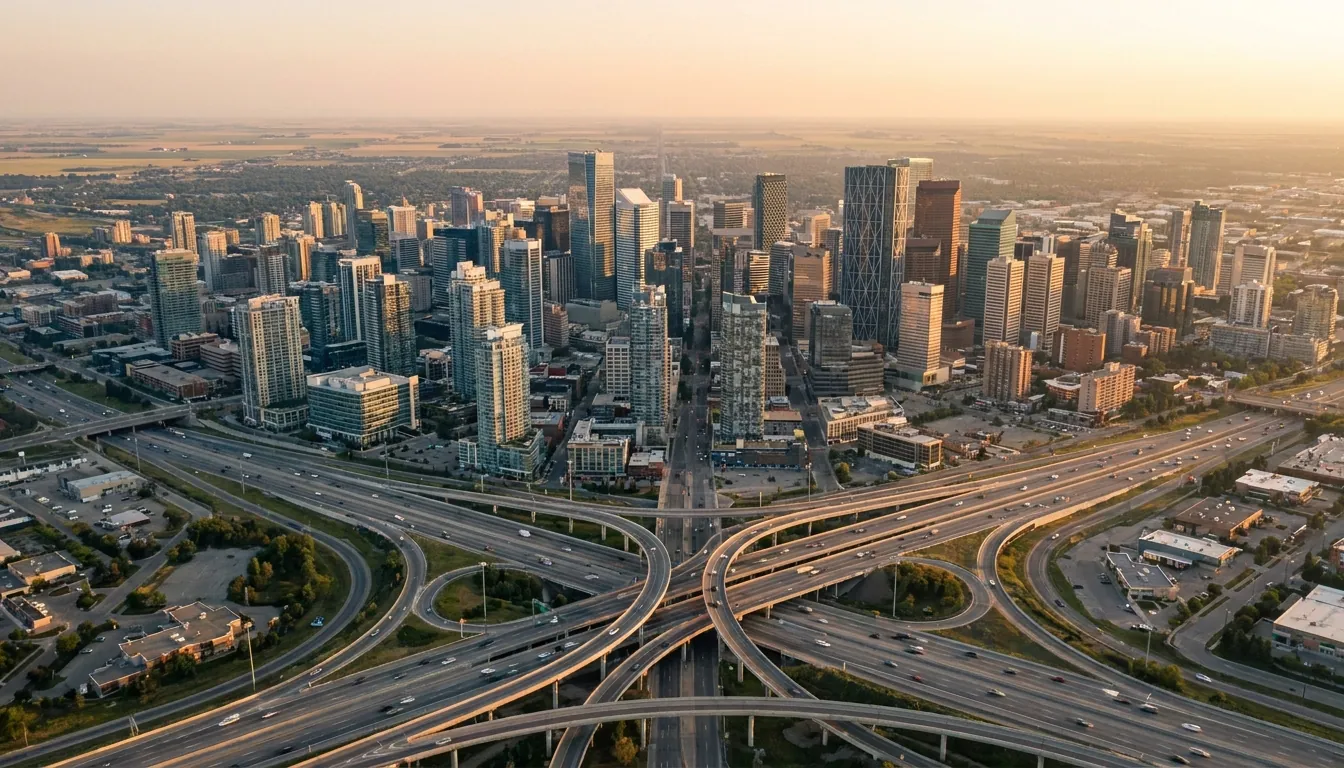
Dallas–Fort Worth is one of the more restricted places in the country to fly a drone commercially, and almost nobody selling aerial video says so up front. Two major airports throw controlled airspace across the centre of the metroplex, Texas has its own drone statute layered on top of federal rules, and the region's biggest stadiums generate flight restrictions on game days. None of that makes aerial work impossible. It makes it something you plan in pre-production instead of discovering on the morning of the shoot. Here is what actually governs a DFW aerial, so you can tell a serious operator from someone who is going to launch and hope.
The three rule sets that apply at once
A legal flight in Dallas has to clear all three. Most people only know about the first one:
- Federal — FAA Part 107. Any commercial drone flight requires the pilot to hold a Remote Pilot Certificate. Flying in controlled airspace additionally requires authorization before takeoff. The general ceiling is 400 feet above ground level, and it drops sharply near airports.
- State — Texas Government Code Chapter 423. Texas makes it an offence to capture an image of a person or of privately owned real property by drone with intent to conduct surveillance, and restricts flight over critical infrastructure, sports venues, and correctional facilities. A district court struck parts of it down in 2022, but the Fifth Circuit reversed that in October 2023, so it is enforceable again.
- Property — whoever owns the ground. Corporate campuses, universities, hospitals, stadiums, and many venues have their own drone policies. FAA authorization does not override a property owner telling you no, and getting it in writing protects everyone.
This is a plain-English summary for planning purposes, not legal advice. Rules change; verify current requirements before any flight.
We fly Part 107 certificated and plan airspace during pre-production, so the aerial plan is confirmed before anyone is standing on site with a case. See the work →
The DFW airspace map, in plain terms
The metroplex is not uniformly difficult. It has a hard middle and easy edges, and knowing which is which is most of the planning:
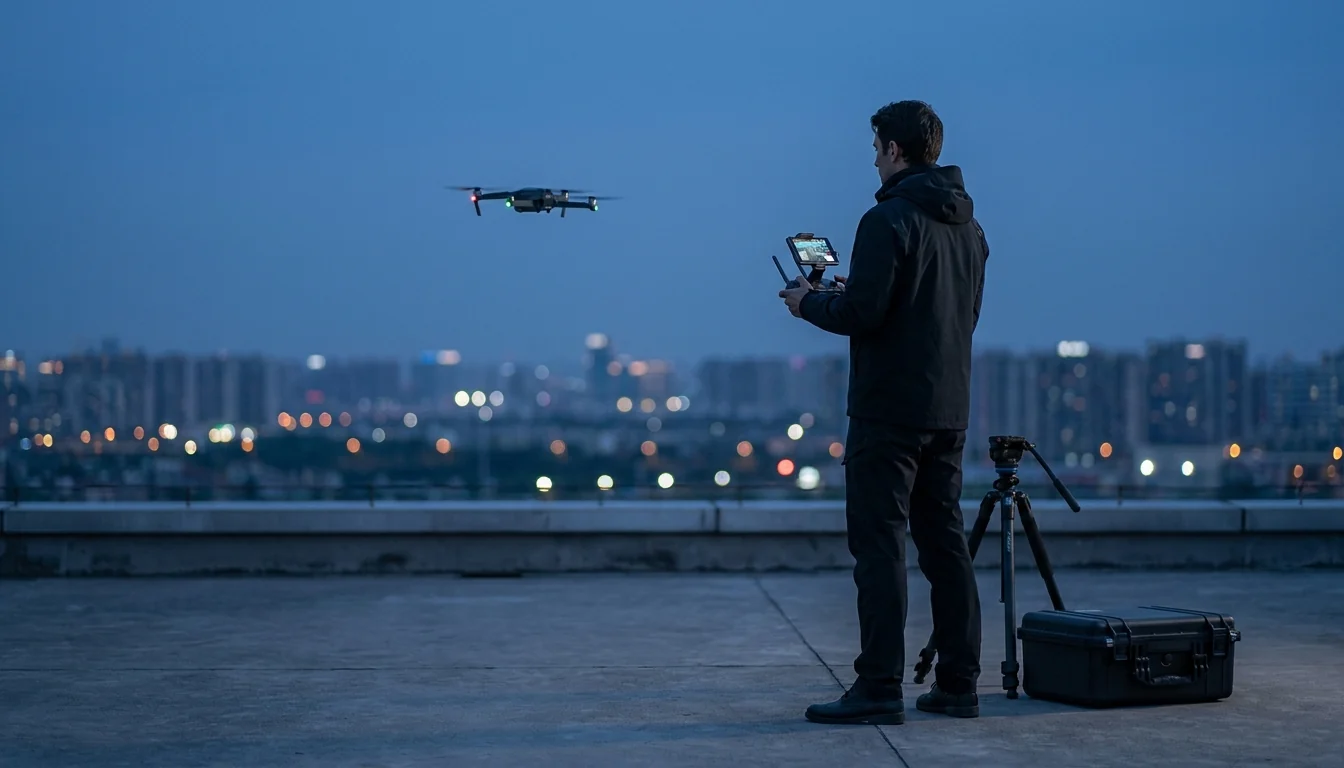
Authorization, a checked ceiling, and a ground plan — decided before anyone opens a case.
- Hardest: downtown Dallas. Sitting inside the airspace of both Love Field and DFW International at once. Authorization is required, ceilings near the airports are frequently far below 400 feet, and some grid cells are set to zero, which means LAANC cannot approve them at all.
- Hard: Irving, Las Colinas, and Grapevine. These sit closest to DFW International. Aerial plans here fail more often than anywhere else in the metroplex, and the ones that succeed are usually planned weeks ahead.
- Moderate: Richardson, Plano, Addison, and North Dallas. Under the Class B shelf and near Addison Airport. Authorization is normally obtainable, but expect a ceiling rather than a free hand. More on Richardson →
- Moderate: Arlington and the entertainment district. Workable most of the time, but stadium event windows change everything. More on Arlington →
- Easiest: Denton, McKinney, and the outer north. Well clear of the worst restrictions, with local airports as the only real factor. Denton and McKinney are where DFW aerial work is genuinely straightforward.
- A zero-ceiling cell is not a dead end, but it is a schedule problem. Those flights require a manual FAA DroneZone waiver rather than instant LAANC approval, and review can take days to weeks. That is a pre-production conversation, not a shoot-day one.
Stadium restrictions on game days
This one catches people out constantly, because the restriction appears and disappears with the schedule rather than living on a map permanently:
- Three nautical miles, three thousand feet. The FAA restricts drone flight within 3 NM of stadiums seating 30,000 or more, up to 3,000 feet above ground.
- One hour before to one hour after. The window covers regular and post-season NFL and MLB games, NCAA Division I football, and major auto racing series.
- It applies in DFW more than most metros. AT&T Stadium and Globe Life Field sit next to each other in Arlington, and a three-nautical-mile ring around them covers a large amount of otherwise useful ground.
- Your certification does not exempt you. The restriction applies regardless of Part 107 status. Working inside it requires specific FAA authorization arranged in advance.
- Penalties are severe. Violations carry substantial civil fines, potential criminal exposure, and confiscation of the aircraft.
- Check the schedule when you book the date. A shoot near the entertainment district on a home-game afternoon is a shoot with no aerials.
Questions to ask before you hire anyone
- "Can I see your Part 107 certificate?" A legitimate operator will send it without hesitation. Anyone who deflects is telling you something.
- "What is the LAANC ceiling at my address?" The right answer is a number, or "I will check and come back to you today." The wrong answer is "we will be fine."
- "What is your liability insurance?" Ask for the certificate. Many commercial properties and venues require a COI naming them as additional insured before you are allowed on site at all.
- "What is the plan if authorization is denied?" A serious crew has a rooftop, a jib, a high-floor window, or a gimbal sequence ready. A crew with no answer has just made your establishing shot a coin flip.
- "Have you flown this specific area before?" DFW is a place where local experience translates directly into fewer wasted hours.
- "Who owns the footage and what am I licensed to do with it?" Worth settling in writing before the shoot, exactly as with any other production.
What aerials are actually good for
Aerial footage gets over-bought. It is genuinely valuable in a few specific jobs and decorative in most others:
- Commercial real estate and land. The only practical way to show a site's size, access, adjacency, and surroundings in one frame. This is where aerials pay for themselves outright.
- Construction progress. A repeating monthly aerial from a matched position is a genuinely useful record for owners, lenders, and marketing.
- Resorts, venues, and large properties. Anywhere the scale or the setting is the selling point. More on property video →
- Establishing a location fast. Two seconds of aerial tells the viewer where they are and buys the rest of the film time to do the real work.
- Where it usually is not worth it. Interior-focused businesses, corporate interviews, product content, and any brand film where the story is happening indoors. Spending the aerial budget on better lighting or a second shoot day almost always returns more.
Need aerials in DFW?
Send the address and we will check the airspace before quoting. 20-minute call, quote within 48 hours.
Book a CallMore DFW guides
- Las Vegas drone laws: where you can fly
- Corporate headshots for your team
- Dallas product photography & video
- Best filming locations in Dallas
- Dallas real estate & apartment video
- Denton video production
- Richardson video production
- McKinney video production
- Irving & Las Colinas video production
- Arlington video production
- Hiring a Dallas videographer & photographer
- What video production costs in DFW
- Drone filming in Las Vegas
The images on this page are illustrative and were created digitally. Our actual client work is in the portfolio. Airspace and legal information is a general summary for planning purposes, not legal advice, and rules change — always verify current FAA and state requirements before a flight.