The Dallas content day: one shoot, a quarter of content.
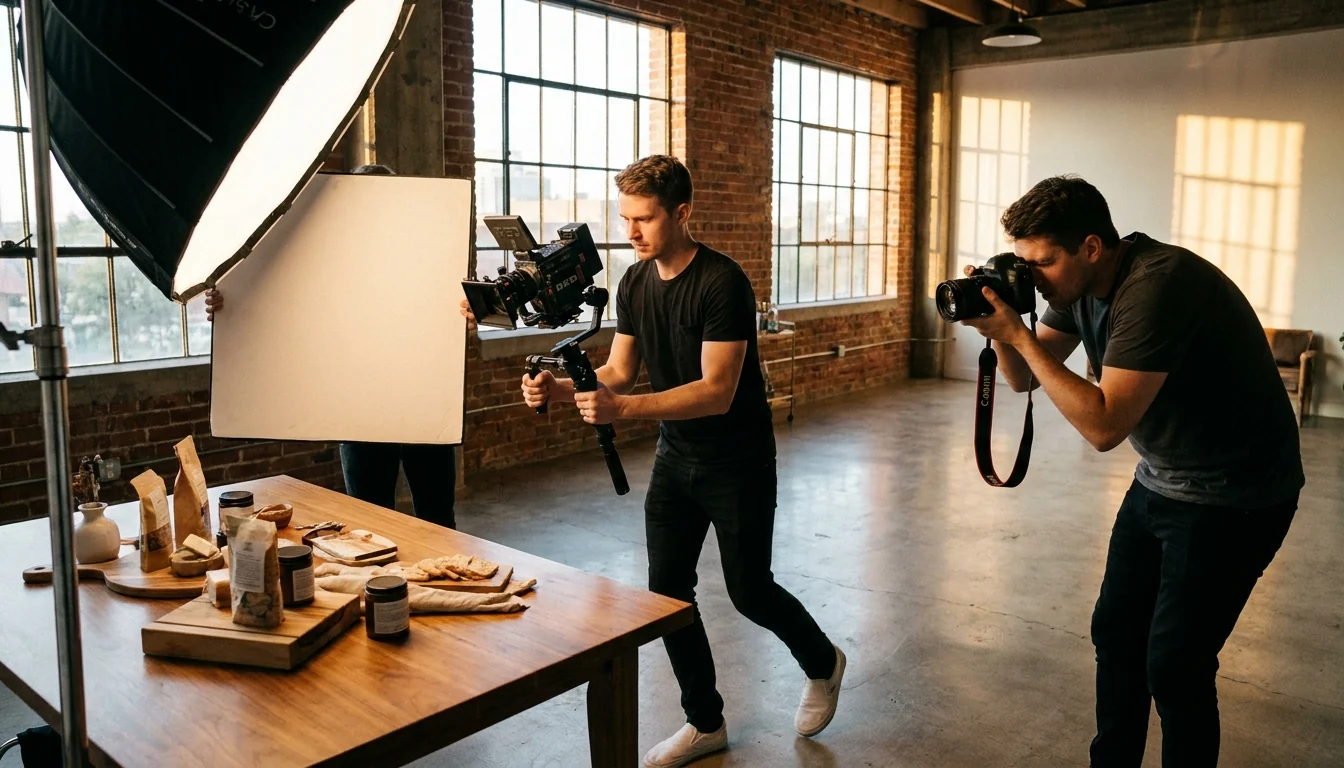
The most common content problem we hear from Dallas businesses is not "we need a video." It is "we need something to post, constantly, and we are always behind." Commissioning a separate shoot every time that pressure builds is the most expensive possible way to solve it. A content day solves it by inverting the model: plan once, shoot once, release for months. This is how that works in practice, what it realistically produces, and how to prepare so the day earns its cost.
What a content day is, and what it is not
A content day is a single planned production day covering multiple setups, shot for both stills and motion, against a list agreed in advance. What it is not:
- Not a single video shoot with extras. A hero film shoot optimises the whole day around one piece. A content day optimises for volume and variety across many, which changes the shot list, the pacing, and often the locations.
- Not a creator posting from a phone. Lit, composed, colour-graded, sound-mixed material has a different ceiling, and it can carry paid spend without looking cheap next to competitors.
- Not improvised. The whole efficiency depends on the plan. An unplanned "just come film us for a day" produces a fraction of the usable output, which is why it usually disappoints.
- Not a substitute for strategy. It produces the assets. Someone still has to decide what the brand is saying and where each piece goes.
This is how we run our recurring DFW work. The Village Dallas is a large amenitised mixed-use community in East Dallas, and our retainer there covers multiple venues inside it, including The Drey Hotel, Meridian, and Sandy Pickle, plus community-wide lifestyle and event programming on a monthly cadence. Seasons, menus, and events change faster than an annual shoot can keep up with, so we shoot to that rhythm instead. See the work →
Why batching wins on cost per asset
The economics are not subtle. Every shoot carries fixed costs that do not care how much you capture:
- Setup and teardown are paid regardless. Lighting a space is the slow part of any production. Doing it once for eight deliverables instead of once per deliverable is where the savings actually come from.
- Travel and load-in happen once. In DFW, moving a crew and gear across the metroplex is real time. One trip beats four.
- Your team is interrupted once. The internal cost of a shoot day, people pulled off work, a space taken out of use, is usually larger than the invoice and almost never counted.
- The edit is the part that scales. More deliverables means more edit hours, but edit hours are cheaper than production hours. That is the whole arbitrage.
- Consistency comes free. Assets shot on one day under one direction look like a campaign. Assets accumulated over a year from different shoots look like a scrapbook.
What comes out of one day
The exact list is scoped per project, but a well-planned day is built to produce a full stack rather than a single piece:
- A hero film. The anchor. Lives on the homepage, opens the deck, and tends to stay relevant for years rather than weeks.
- Vertical cutdowns for social. Reels, Shorts, TikToks. Cut to hold attention in the first second, framed vertically at capture rather than cropped out of a horizontal frame afterwards, which is the difference that shows.
- Dedicated paid-media cuts. Ad creative has different requirements from organic: a faster hook, clearer product, licensed music cleared for paid use. Cutting these deliberately rather than reusing organic posts is what makes the spend work.
- A stills library. From the same setups and the same light, so your photos and your video finally match. This is the piece most video-only vendors cannot deliver.
- Interview and testimonial material. If anyone is willing to talk on camera, a short block yields about-us and credibility content that is very hard to reconstruct later.
- Detail and B-roll coverage. The connective material that makes future edits possible without another shoot, and the most commonly skipped item on an under-planned day.
How to plan one so it actually delivers
- Start from the placement, not the idea. Write down where each asset will run before deciding what to shoot. A list built from real placements produces material that gets used; a list built from ideas produces material that sits in a folder.
- Lock the shot list before the day. It is the single highest-leverage document in the process. Everything about the schedule, the gear, and the order of setups derives from it.
- Group by setup, not by topic. Shoot everything that shares a location and a lighting state together, even if those pieces will publish months apart. Reordering the day around lighting rather than narrative is what buys the extra setups.
- Name one decision-maker for the day. Someone with authority, present, and not simultaneously running a meeting. Approval delays are the most common way a paid production hour gets wasted.
- Prepare product and wardrobe in advance. Clean samples, backups, and a short wardrobe note to anyone on camera. Small preparation, disproportionate effect on the result.
- Shoot the evergreen material first. If the day runs long, and days do run long, you want the timeless assets captured and the dated ones as the thing you drop.
Dallas-specific practicalities
- Certificates of insurance, filed early. Most Dallas commercial buildings require a COI naming the property before a crew can load in. This is administrative, not difficult, but it has to happen before shoot morning rather than on it.
- Summer light dictates the schedule. June through September, usable exterior light in DFW is realistically before 10am or after 6pm. A content day needing exteriors in August is a split day, and planning it as one continuous block will not work.
- Drone needs authorisation, not just a licence. Much of the metroplex sits in controlled airspace tied to DFW International, Love Field, Addison, and Dallas Executive. Commercial flight requires an FAA Part 107 certificate plus airspace authorisation for the specific location. Confirm before it is in the plan.
- Downtown and Uptown load-in is slow. Getting gear into a downtown tower costs real time versus a suburban office park. It shows up as extra hours if nobody accounted for it.
- Use the location range. Deep Ellum, the Arts District, downtown, and the suburban campuses are all within a short drive, which makes genuine visual variety achievable inside one day. The Dallas filming locations guide breaks down what each area is good for and where permits apply.
One-off, quarterly, or monthly
- One-off makes sense for a launch. A new product, a new location, a rebrand. A defined moment with a defined asset list.
- Quarterly suits most B2B. Professional services, manufacturing, and corporate brands change slowly enough that four planned days a year keeps everything current.
- Monthly suits anything seasonal. Restaurants, hotels, venues, fitness, and retail have content that is dated by definition. Menus change, events happen, and the material expires. Monthly is the only cadence that keeps up, and it is why our recurring hospitality work runs that way.
- The break-even is lower than people assume. If you will need video more than twice a year, a recurring arrangement usually costs less per asset than commissioning twice, and it removes the re-quoting and re-briefing cycle each time.
Ready to plan a Dallas content day?
30-minute consultation. We will build the shot list against real placements and quote within 48 hours.
Book a CallMore Dallas guides
- Dallas Roofing Video Marketing: A Practical Content Plan
- Dallas Contractor Video Production: Photos, Films and Trust
- Las Vegas drone laws: where you can fly
- Corporate headshots for your team
- Dallas product photography & video
- Dallas drone videographer: what is actually legal
- Denton video production & live music filming
- Richardson video production & the Telecom Corridor
- Dallas fashion photographer & lookbook video
- Las Vegas hotel & resort photography
- Fort Worth commercial photographer
- DFW trade show & conference video
- Las Vegas event photographer
- Firearms & defense brand content
- Dallas hotel & hospitality photography
- Dallas restaurant & food photography
- Dallas commercial photographer & corporate headshots
- Hiring a Dallas videographer & photographer, one crew
- Dallas corporate video production
- What video production costs in DFW
- Dallas restaurant & hotel video production
- Best filming locations in Dallas
- Frisco video production & videographer
- McKinney video production & videographer
The production image on this page is illustrative and was created digitally. Our actual client work is in the portfolio.
Planning the day itself? Use our Dallas video shoot checklist for access, audio, weather alternatives, a sample schedule and media handoff.