Dallas product photography that passes spec and actually sells.
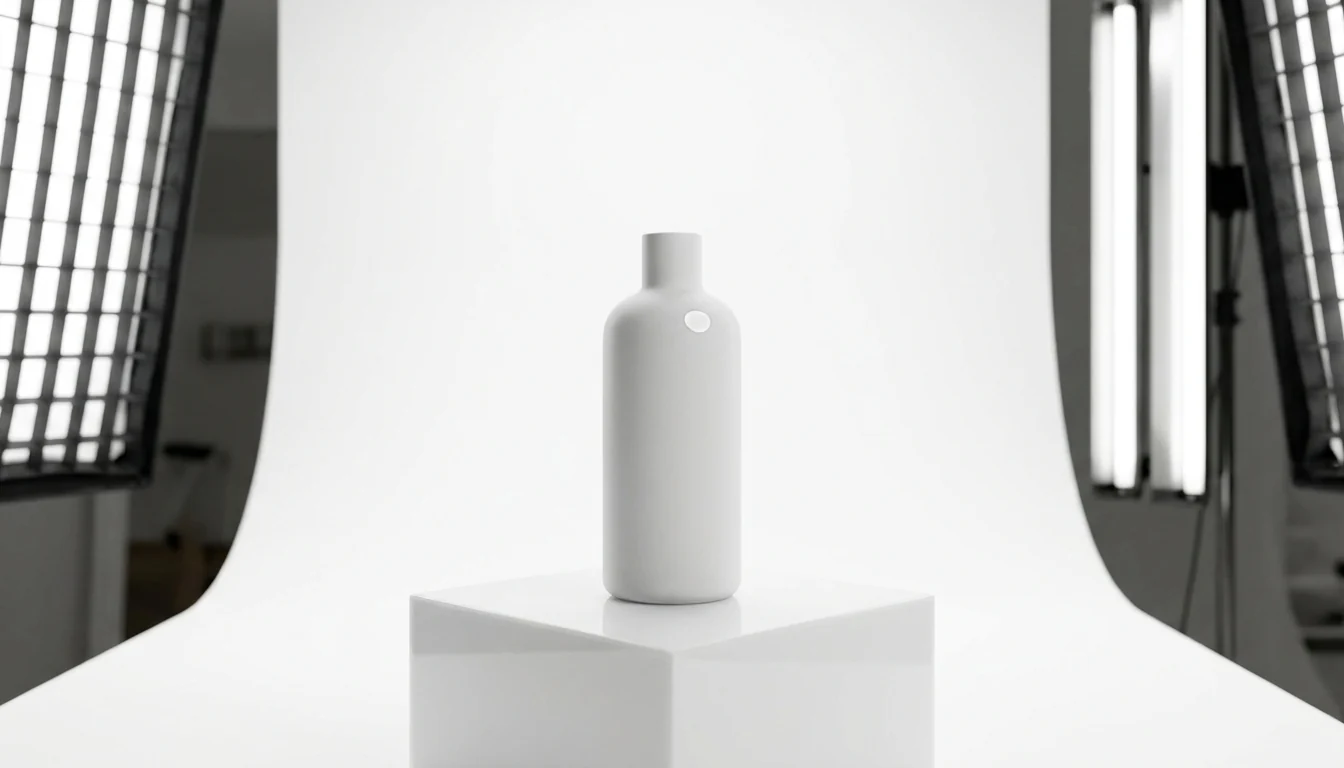
Product photography is the one category where the brief is genuinely objective. A marketplace listing either meets the platform's technical requirements or it gets rejected. A colour either matches the physical product or you eat the return. A hero image either communicates scale and material in the two seconds a shopper gives it, or it does not. Dallas has an unusually deep product economy to serve — the Dallas Market Center is the leading wholesale marketplace in North America, and the metroplex is thick with apparel, home goods, gourmet, and consumer brands feeding it. This is what a shoot actually involves, what it costs, and what separates images that convert from images that merely exist.
Know the specs before you book anything
Most rejected listings and reshoots trace back to a photographer who did not check the destination platform's rules first. The current requirements worth knowing:
- Amazon main images must be pure white. That means RGB 255, 255, 255 — not "close to white," not a light grey that reads white on your monitor. Amazon scans for it automatically.
- The product should fill about 85% of the frame. Too much negative space makes your thumbnail lose to a competitor's on a phone screen, which is where the decision is made.
- Shoot at 1,600px or larger on the long edge. Amazon's minimum is 1,000px, but 1,600px is the threshold that turns on zoom. Zoom correlates with conversion, so treat 1,000 as a failure state, not a target.
- No text, logos, borders, watermarks, or graphics on the main image. Save the badges and callouts for secondary images, where they are allowed and where they do real work.
- The main image must be a real photograph of the real product. Renders, mockups, and illustrations are not permitted as the main image.
- Get the white in-camera, not in post. Lighting a background to true white is a lighting problem. "Fixing" it later by crushing levels eats the edges of your product and produces the mushy, halo-fringed cutouts that make a listing look cheap.
We shoot stills and motion from the same setups for hospitality, lifestyle, and consumer brands on recurring monthly retainers — the model that fits a business with a product line that keeps changing. See the work →
The four image types a product line needs
A single hero shot is not a product shoot. Every SKU that sells online needs a set, and each image in that set answers a different objection:
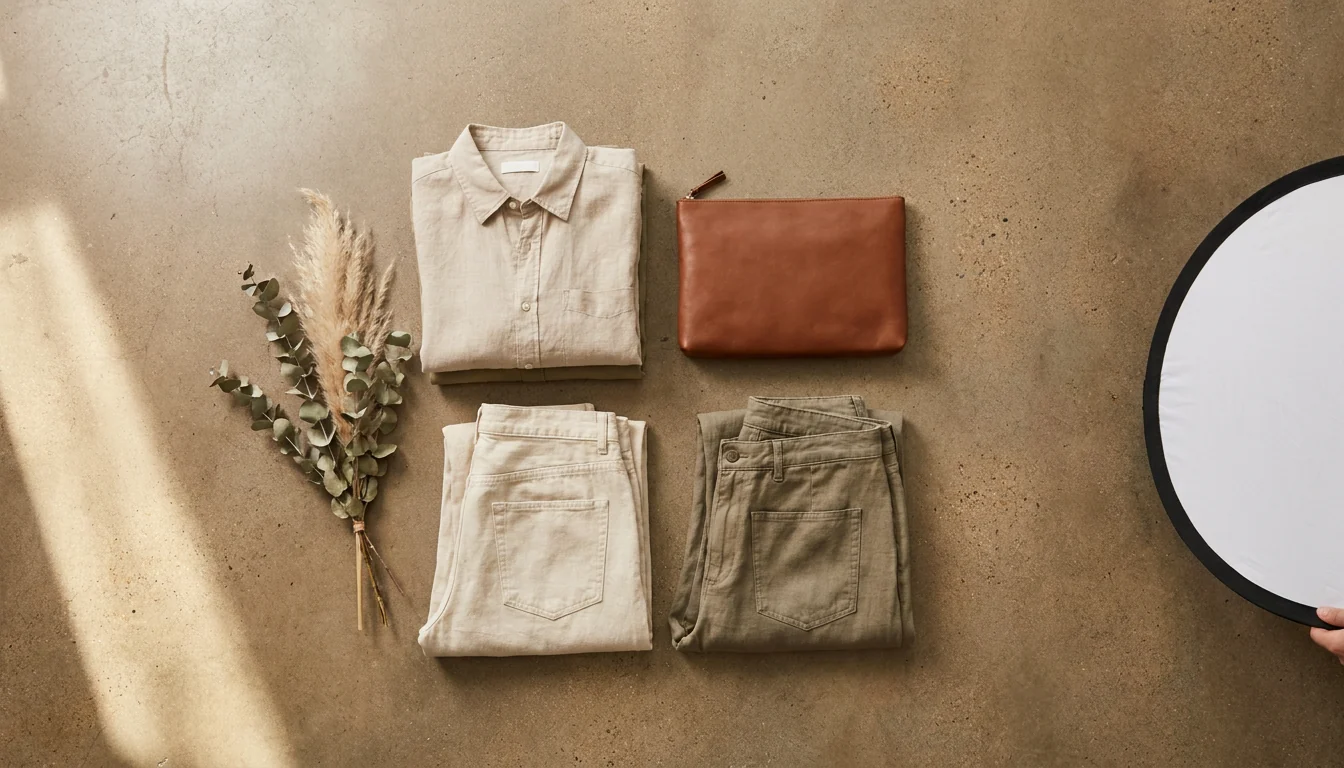
Styled lifestyle frames do the emotional work that a white-background image structurally cannot.
- The spec shot. Clean, on white, correctly framed, colour-accurate. Its only job is to pass the platform's requirements and let the shopper see the object clearly.
- The detail shot. Stitching, grain, weave, closure, finish. This is the image that justifies a premium price, and it is the one most brands skip.
- The scale shot. The product in a hand, next to a familiar object, or in use. "Smaller than I expected" is one of the most common reasons for a return, and it is entirely a photography failure.
- The lifestyle shot. The product in a real context with a real human. It does the aspirational work, and it is the frame that performs on paid social where a white-background image dies instantly.
Add colour and variant coverage on top of that, and the shot count per SKU grows quickly. This is why an honest quote requires the actual SKU list rather than a number of products.
Colour accuracy is the thing that costs you money
Nothing in product photography has a harder financial consequence than getting colour wrong. A garment that photographs one shade off generates returns, refunds, negative reviews, and the shipping cost on both legs. The controls that prevent it:
- Shoot a colour reference in the first frame of every lighting setup. A colour checker card in one frame gives the retoucher a real target instead of a memory.
- Keep your light sources consistent. Mixing daylight from a window with tungsten fill produces colour casts that cannot be cleanly separated afterwards.
- Look at the physical product on set, under neutral light. Matching to the object in the room beats matching to a hex code someone typed into a brand deck three years ago.
- Approve on a calibrated display, not a phone. Every phone screen applies its own processing. Sign off on colour where colour is actually accurate.
- Expect fabric and metal to be hardest. Deep blacks, saturated reds, and brushed metals are where most reshoots come from. Budget extra time for them rather than discovering it at 4pm.
Shoot motion on the same day
The expensive parts of a product day are the lighting build, the styling, and the product prep. Those are already paid for by the time the first still is captured, which makes adding video the highest-leverage decision available:
- Product detail pages with video convert better than pages without. Motion answers questions a still cannot: how it opens, how it drapes, how big it really is.
- Paid social needs vertical, and it needs volume. One shoot day should produce dozens of short vertical clips, not one polished thirty-second film.
- Decide before the set is built. A set lit purely for stills often has stands, flags, and cables exactly where a camera move needs to travel. Retro-fitting motion into a stills day costs more than planning it.
- Simple moves outperform elaborate ones. A slow turntable, a controlled slide, a hand entering frame. Product motion is not the place for choreography.
- Capture sound if the product makes any. A closure clicking, a lid seating, liquid pouring. It is nearly free on the day and impossible to fake convincingly afterwards.
This is the same logic behind the Dallas content day — consolidate the fixed costs, then take everything the setup can give you.
Wholesale, catalogue, and Market timing
Dallas has a wholesale calendar that most cities do not, and it changes when you should be shooting:
- Dallas Market Center runs a year-round schedule. Apparel and Accessories Markets, plus home décor, gift, gourmet and housewares, lighting, and western markets. Brands showing there need imagery in hand before the doors open.
- Book four to six weeks ahead of a market date. The shoot day is never the bottleneck. Retouching, colour approval, and internal sign-off are.
- Line sheets have their own requirements. Consistent angle, consistent scale, consistent background across an entire line, so a buyer can compare products rather than admire photographs. It is a discipline problem, not a creative one.
- Shoot the whole line in one build. Splitting a catalogue across two sessions weeks apart guarantees a visible seam in lighting and colour that no amount of retouching fully hides.
- Showroom and booth imagery is a separate job. If you also need the space photographed, that is environmental work with different lighting requirements — see DFW trade show and conference coverage.
How to prepare so the day is not wasted
- Send a shot list, not a vibe. SKU, angles required, variants, and the destination for each image. This is what converts a vague quote into an accurate one.
- Deliver products clean and assembled. No stickers, no price tags, no packing creases. Steaming garments on set is billed at production rates.
- Send duplicates of anything fragile or perishable. Scratch-prone finishes, fingerprint-magnet surfaces, food, flowers, anything that melts.
- Name the decision-maker. Colour approval by committee is what turns a two-week delivery into a six-week one.
- Ask what you are licensed to do with the images. Web, paid social, print, packaging, and third-party marketplaces are not automatically all included. Agree it in writing before the shoot, not after you have built a campaign on it.
- Confirm the file deliverables. Sized and compressed web files, print-resolution masters, transparent PNGs for cutouts, and the correct crop ratios per platform. Asking afterwards costs another round.
Have a product line to shoot?
Send the SKU list and we will come back with a real number. 20-minute call, quote within 48 hours.
Book a CallMore DFW guides
- Las Vegas drone laws: where you can fly
- Corporate headshots for your team
- Dallas drone videographer: what is actually legal
- Dallas fashion photographer & lookbook video
- Dallas commercial photographer & corporate headshots
- Dallas restaurant & food photography
- The Dallas content day: one shoot, a quarter of content
- DFW trade show & conference video
- Hiring a Dallas videographer & photographer
- What video production costs in DFW
- Las Vegas product video production
The studio images on this page are illustrative and were created digitally. Our actual client work is in the portfolio. Platform image requirements are summarised as published by the platforms and can change; verify current specs before a shoot.