How to hire a Las Vegas videographer (2026 guide).
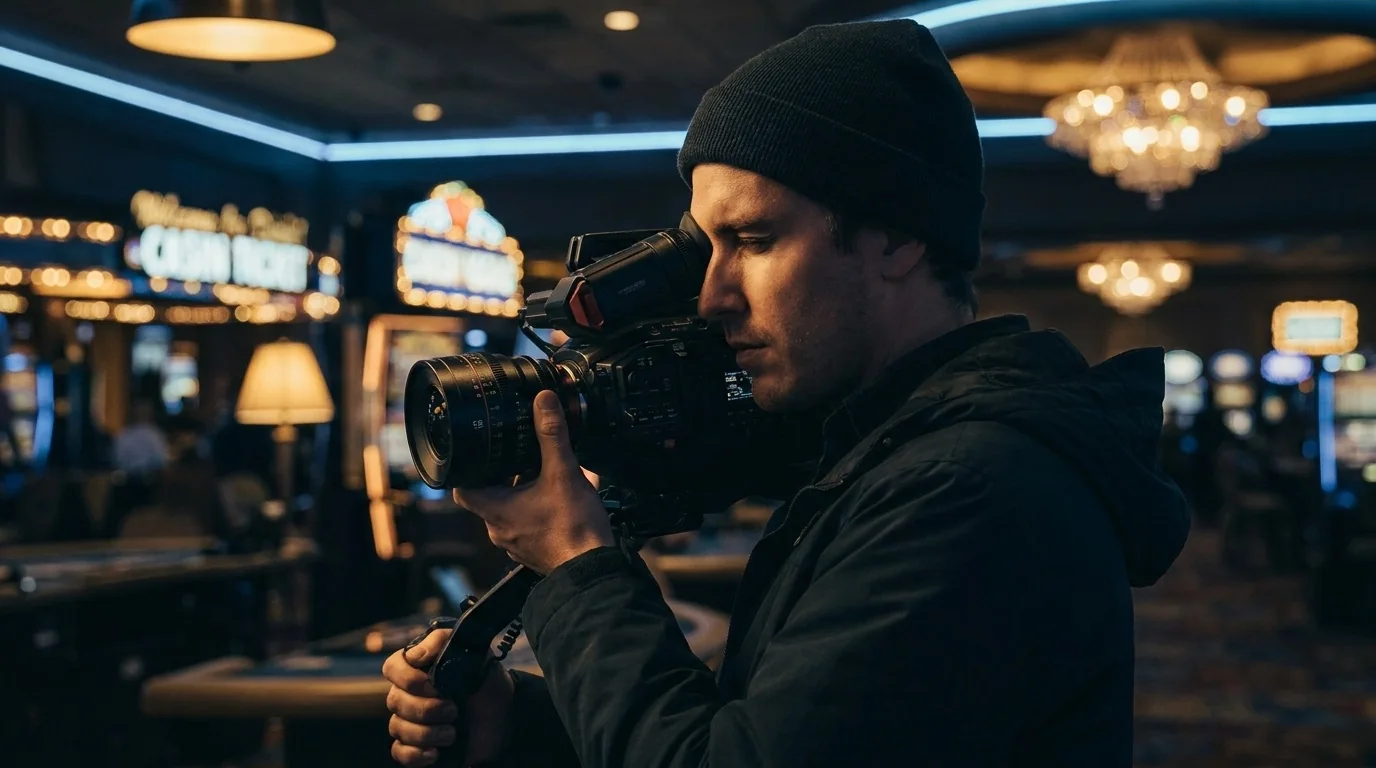
Hiring a videographer in Vegas isn't like hiring a plumber. No licensing, no standard rate, and an enormous swing from budget freelancers to full production companies. This is the guide we wish every prospect had before their first call: what to look for, what to ask, and how to spot a pro before you wire a deposit.
Start by defining what you actually need
Before you Google "videographer Las Vegas," answer three questions for yourself:
- What's the deliverable? A 60-second social reel, a 3-minute brand film, a full event recap, a documentary segment, and a TV commercial all need different crews, different gear, and different budgets. Be specific.
- Who's the audience? Internal investor deck vs. paid social vs. broadcast TV all have different polish bars. A Las Vegas videographer pricing a paid-media spot brings a different team than someone making a recruitment video.
- What's the success metric? "We want more bookings" is different from "we want a brand asset for the website." The first needs cutdowns optimized for ad platforms. The second needs a hero film with a longer shelf life.
Once you have those three answers, you can have a real first call with any Las Vegas video production company.
Freelancer vs. production company, which do you need?
A solo freelancer with a strong kit handles single-camera testimonials, founder interviews, basic event highlights, and recurring social content well. Day rates are lower. You're trading redundancy for budget, if their one camera fails, the shoot is over.
A production company brings a director or producer plus a camera operator plus dedicated sound plus often a drone pilot and a separate post-production lead. Costs more, but the redundancy means your shoot doesn't collapse on a single gear failure, and the deliverables come faster because editing happens in parallel to the shoot.
Rule of thumb: a smaller budget points to a freelancer, a mid-range budget to a small studio, and a larger budget to a production company. For a sense of where your project fits, see our Las Vegas videographer cost guide.
What separates a pro from a kit-camera amateur
Five tells, in order of how diagnostic they are:
- Gear. Pros bring cinema cameras (Sony FX-series, Canon C-series, RED, ARRI). Pro lighting (Aperture, Litepanels, Astera). Wireless lav mics + external recorder. Stabilization (gimbal or steadicam). Drone if the scene calls for it. Amateurs bring a mirrorless DSLR and a shotgun mic.
- Pre-production. A pro asks about your goals, your audience, your brand voice, your competitors, and your timeline before they quote. An amateur asks "what date and how many hours?"
- Audio. Audio is harder than video and most amateurs ignore it. Listen to their portfolio with your eyes closed, if you can hear room echo, HVAC hum, or muddy interviews, they didn't bring real audio gear.
- Portfolio depth. Anyone can luck into one good shot. Pros show 20-50 projects in your category with consistent quality. If their portfolio is a 90-second highlight reel and three Instagram posts, ask to see full deliverables from past clients.
- Process. Pros send contracts, treatments, call sheets, and revision cycles. Amateurs send a Venmo link and a vibe.
8 questions to ask on the first call
- How many shoots have you done in my category in the last 12 months?
- What gear are you bringing, and what's the backup if a camera fails?
- Who's editing, you, or a colorist/editor I haven't met?
- What's the full deliverables list and timeline?
- Are you insured? Will you provide proof of insurance to the venue?
- If drone is involved, are you FAA Part 107 certified, and do you handle airspace authorizations?
- How many revisions are included in the quote?
- What's the deposit, and what's the reschedule / cancellation policy?
Any Las Vegas videographer worth booking will answer all eight in the first 20 minutes. If they dodge, that's the answer.
Red flags that will save you a bad shoot
- No contract. "We'll figure it out" means you have no recourse when something goes wrong.
- Quote without questions. If they price your project without asking what it's for, they're guessing, and you're paying for the guess.
- Portfolio fragments. Insist on full deliverables from at least three past clients, not just a 60-second highlight reel.
- No insurance proof. Major Las Vegas venues require COI (certificate of insurance), Wynn, Bellagio, MGM, Aria. If your videographer can't produce one, your shoot day will be canceled at the door.
- All shots, no story. Pretty footage isn't a film. Ask how they structure narrative, they should have an answer beyond "we'll figure it out in the edit."
- Sketchy turnaround promises. "Same-day delivery" for a 2-hour event is normal. "Same-day delivery" for a full hotel brand film means corners getting cut.
When to book
Las Vegas has predictable busy seasons, CES in January, Formula 1 in November, fight weekends, major conferences, and the spring wedding season. Every working Las Vegas videographer's calendar fills up 6-10 weeks ahead for those windows.
Brand films: 4-8 weeks of lead time. Events: 2-6 weeks. Same-week: possible but adds a rush premium. During CES / F1 / fight weekends: book 3+ months ahead or expect to be told no.
How Picture Perfect Video would answer all of this
We've been shooting in Las Vegas full-time since 2022, hospitality, fashion, defense, drone, and special events. Cinema cameras (Sony FX), Aperture lighting, wireless audio, FAA Part 107-certified drone, full commercial insurance, contracts with every project, and a small fast crew that runs sets like operations.
The fastest way to find out if we're the right fit is a 30-minute call. We'll ask the questions in this guide, you can ask the eight questions above back, and we'll send a quote within 48 hours. No deck, no pressure.
Tell us about your project. We'll quote in 48 hours.
30-minute call. Vegas, Dallas, LA.
Book a CallRelated guides
- Las Vegas Roofing Video Marketing: Scripts and Shot Lists
- Las Vegas Roofing Leads: Costs, Channels and Calculator
- Las Vegas drone laws: where you can fly
- Corporate headshots for your team
- Dallas product photography & video
- Dallas drone videographer: what is actually legal
- Denton video production & live music filming
- Richardson video production & the Telecom Corridor
- Dallas fashion photographer & lookbook video
- Las Vegas hotel & resort photography
- Fort Worth commercial photographer
- DFW trade show & conference video
- Las Vegas event photographer
- Firearms & defense brand content
- Dallas hotel & hospitality photography
- Dallas restaurant & food photography
- How much does a Las Vegas videographer cost?, Day rates, package ranges, what drives the price.
- Drone filming in Las Vegas: FAA rules and restricted airspace.
- What to expect on a Las Vegas video shoot.
- How to find an event videographer, pre-booking checklist.