What to expect on a Las Vegas video shoot.
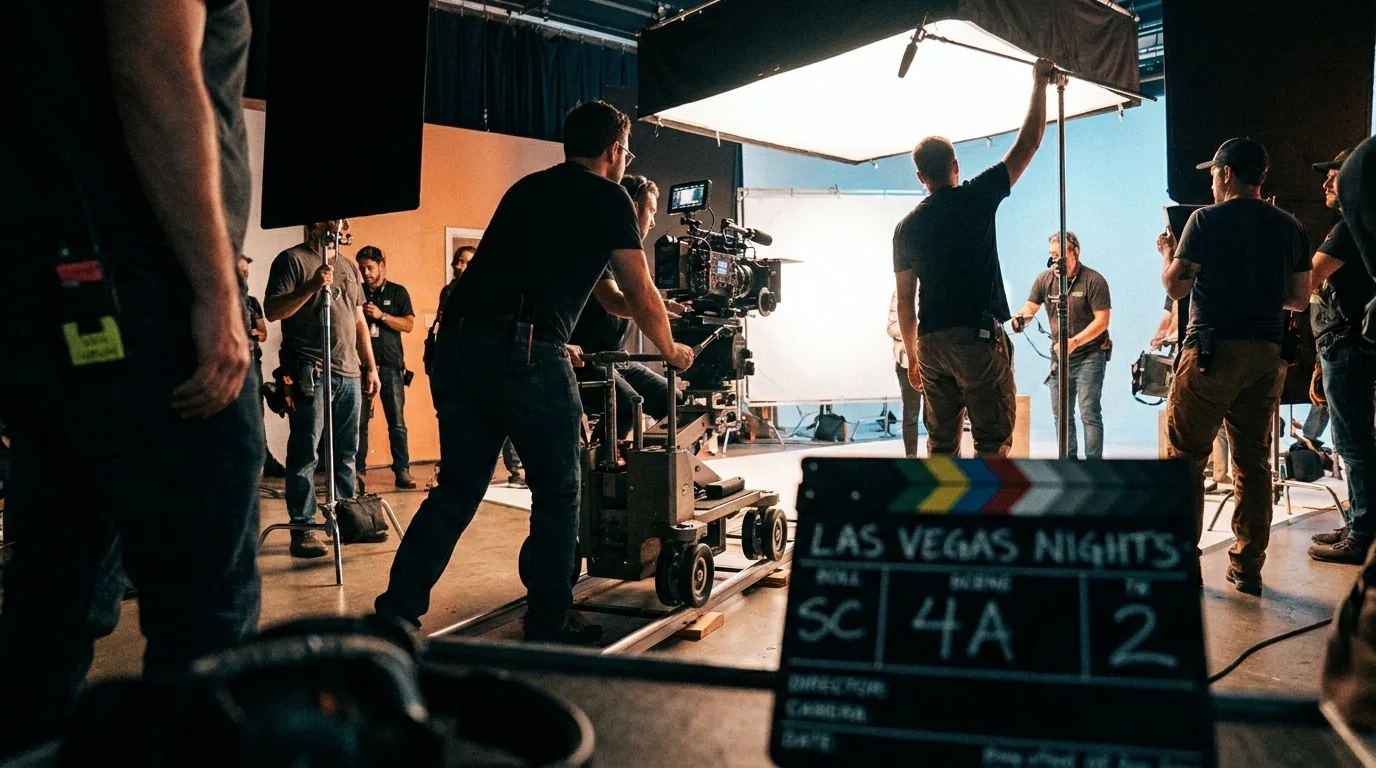
Two days before every shoot, first-time clients ask the same thing: "what do we actually do?" Here's the walk-through. The more prepared the client, the better the footage.
Stage 1, The brief call (week -4 to -2)
Twenty-minute call where we ask:
- What's the goal, bookings, brand lift, recruiting, fundraising?
- Who's the audience, internal investors, paid social, broadcast TV?
- What are the deliverables, hero film, 30s cutdown, vertical reel, photo gallery?
- What's the budget range and the deadline?
- What does success look like, what should this make people do?
Within 48 hours we send a quote, a deliverables list, and a proposed shoot date. If you accept, deposit is 30-50%; the rest is due near delivery.
Stage 2, Pre-production (week -2 to -1)
The unglamorous but important week. We:
- Build a shot list, every clip we need to come home with
- Scout the location (in person for big shoots, via photos for simpler ones)
- File LAANC airspace authorization if drone is involved (see our drone guide)
- Confirm wardrobe and on-camera talent
- Send a call sheet 48 hours before, who's arriving when, where to park, who's the point of contact
From you, we need: venue confirmation, the names and arrival times of anyone on camera, any logos or assets we should match, and any constraints (closing time, noise restrictions, no-fly zones).
Stage 3, Shoot day
Crew arrives 60-90 minutes before scheduled call. Here's how a normal Las Vegas shoot day flows:
- Setup (60-90 min before call): camera build, lighting, audio level checks, walkthrough.
- Talent brief (15 min): we tell anyone on camera what to expect, where to look, how to stand. Lower the nerves.
- Block A, interviews / hero shots: the most important footage first while everyone's fresh and the light is best.
- Block B, B-roll & details: close-ups, environment, ambient detail. We can keep shooting this with smaller crew.
- Block C, drone / aerial (if applicable): usually scheduled around best light and wind.
- Wrap (15-30 min after final shot): data backup to two drives on-site, gear pack, final walk-through with you.
Stage 4, Post-production (week 0 to +2)
What happens after the cameras pack up:
- Day 0: Footage backed up to two drives + cloud. Same-day social cut (15-60s) delivered if it was on the deliverables list.
- Day 1-7: First-cut assembly. Story structure, pacing, music choice, rough color.
- Day 7-10: First cut delivered for your review. You get one or two rounds of revisions.
- Day 10-14: Color grading, sound design, captioning, platform-specific exports.
- Day 14: Final delivery, typically a Google Drive or Frame.io link with hero film + cutdowns + photo gallery (if applicable).
What you can do to make your shoot better
- Send reference videos. Show us 3-5 films you love. Saves a lot of "what does premium mean to you" back-and-forth.
- Be honest about budget. A "small budget but it should look like Apple" project doesn't exist. Tell us the real number and we'll tell you what's achievable.
- Pick your on-camera people carefully. The person with the best title isn't always the best on camera. Choose comfort over hierarchy.
- Don't direct from off-camera. Tempting, but it makes talent self-conscious. We've got it.
- Trust the crew on location. If we ask to move a couch or close a blind, it's because the camera sees something the eye doesn't.
- Confirm the deliverables list. Read the quote carefully. Adding a cutdown after the shoot is more expensive than adding it before.
Brief us in 30 minutes. Quote in 48 hours.
No deck, no pressure. Vegas · Dallas · LA.
Book a CallRelated guides
- Las Vegas drone laws: where you can fly
- Corporate headshots for your team
- Dallas product photography & video
- Dallas drone videographer: what is actually legal
- Denton video production & live music filming
- Richardson video production & the Telecom Corridor
- Dallas fashion photographer & lookbook video
- Las Vegas hotel & resort photography
- Fort Worth commercial photographer
- DFW trade show & conference video
- Las Vegas event photographer
- Firearms & defense brand content
- Dallas hotel & hospitality photography
- Dallas restaurant & food photography
- How to hire a Las Vegas videographer.
- How much does a Las Vegas videographer cost?
- Drone filming in Las Vegas: FAA rules.
- How to find an event videographer.